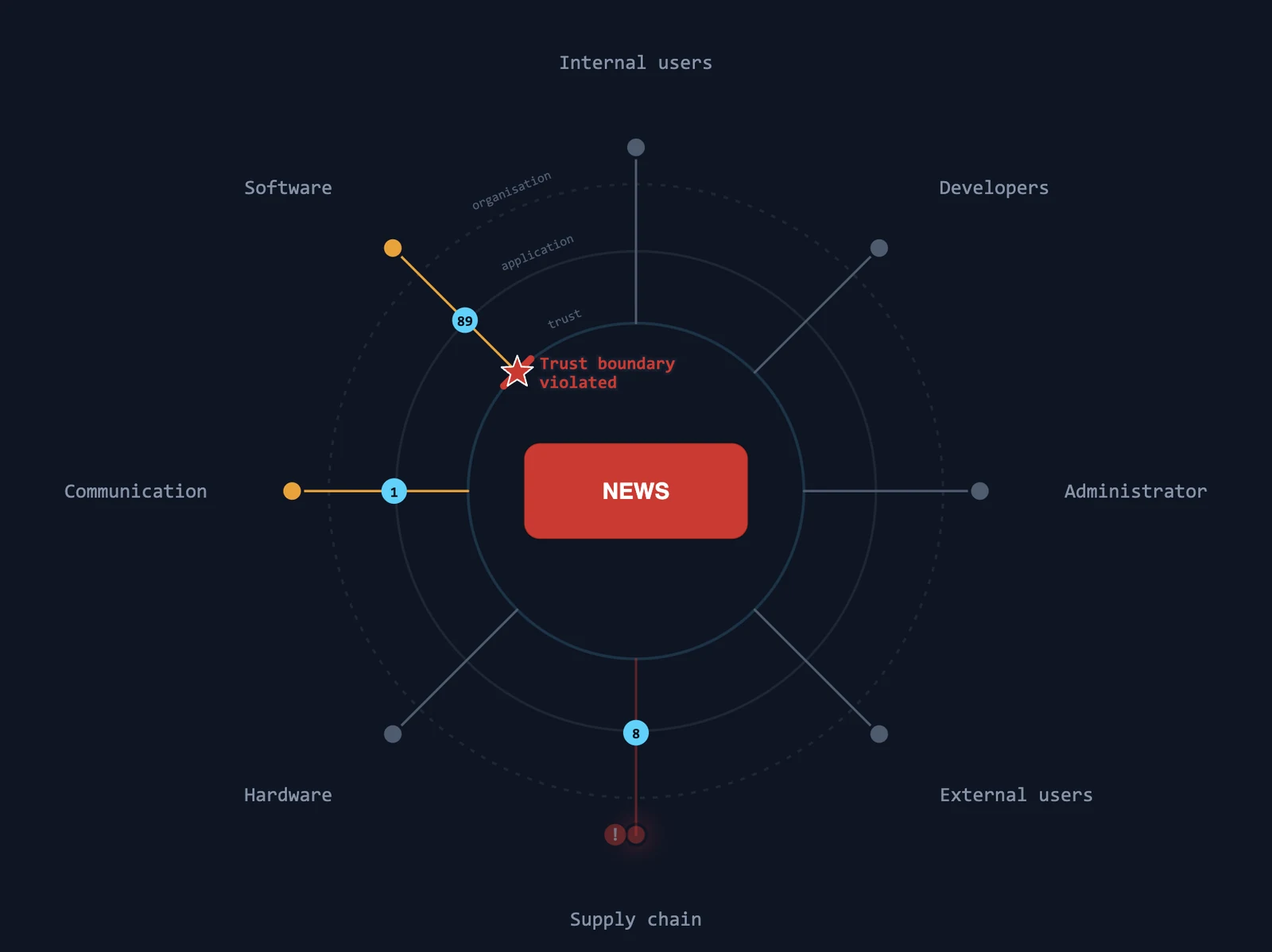
CyberRiskGuru is threat modelling and risk evidence for organisations that have to show their security posture. Built in Oslo by Parsec Software AS, hosted in the EU, and developed since 2012 — as BOSS Analytics until 2019.

NIS2 · Article 21 · Supply chain

NIS2 Wants
Evidence.
Not Promises.

Whether your business is in scope or sells to companies that are, you will be asked to show documented risk analysis and vulnerability handling. CyberRiskGuru builds that record as you work — and is honest about what it does not cover.

Does This Apply To You?

Two Ways NIS2 Reaches You.

Directly in scope

Your business is covered

Generally medium and large companies — 50 or more employees, or annual turnover and balance sheet both above €10 million — in the sectors listed in the directive's annexes. Some, such as DNS and trust-service providers, are in scope whatever their size. Article 21 requires risk-management measures you can document.

Through your customers

Your customers are covered

Supply chain security is one of the mandatory Article 21 measures, so covered companies must assess their suppliers. Expect security questionnaires and contract clauses — even if you are too small to be in scope yourself.

Not sure which applies to you? The free self-assessment works out whether NIS2 reaches you, then goes through the Article 21 measures and shows where your gaps are. About ten minutes, no account, nothing stored.

Take The Self-Assessment

General information, not legal advice. Whether and how NIS2 applies to you depends on your sector, your size and how your country implements the directive.

What It Covers

Article 21, Honestly.

The ten minimum measures in Article 21(2), and where CyberRiskGuru gives you evidence. The rest is policy and process work — yours, or your consultant's.

MeasureEvidenceWhat you get
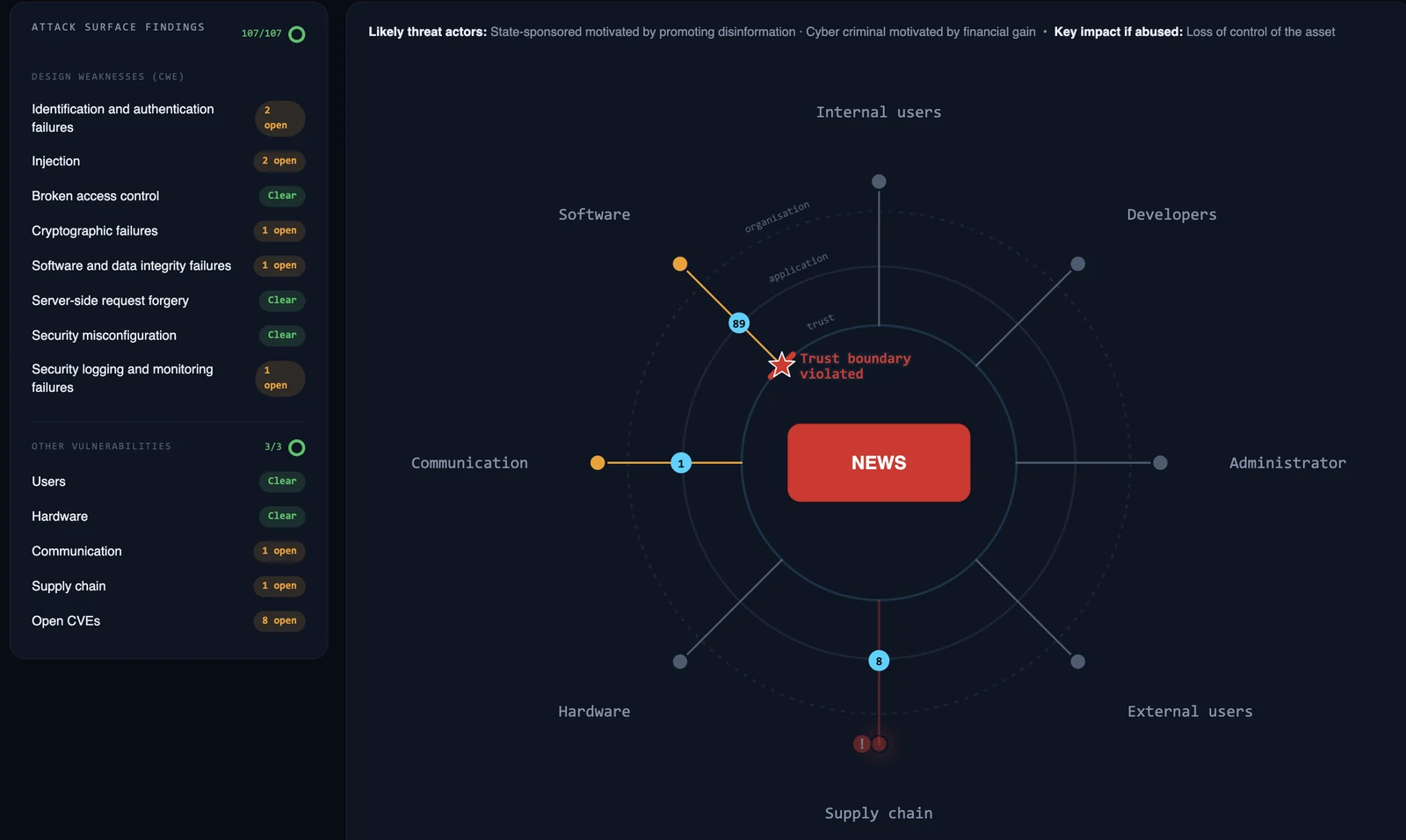
(a)Risk analysis and information system security policiesCoveredA threat model per application: assets, attack surface, design weaknesses (MITRE CWE), attack methods (CAPEC) and your risk posture over time. The written security policy itself is yours to adopt.
(b)Incident handlingPartlyIncidents logged against the attack vectors in your model. Your incident response procedure itself is yours to write.
(c)Business continuity, backup and crisis managementNot coveredPolicy and process work.
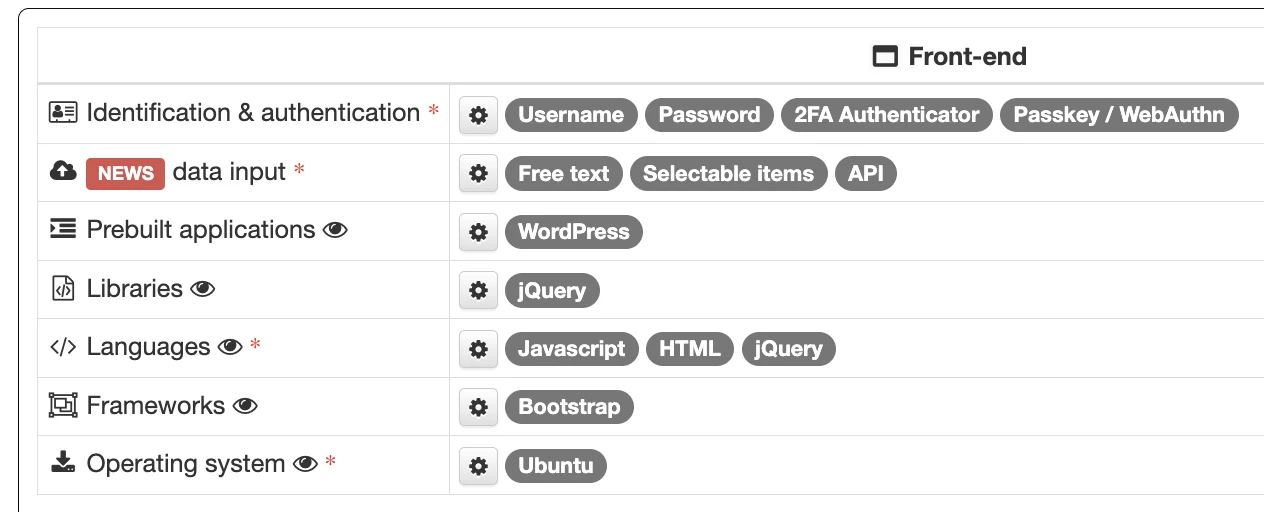
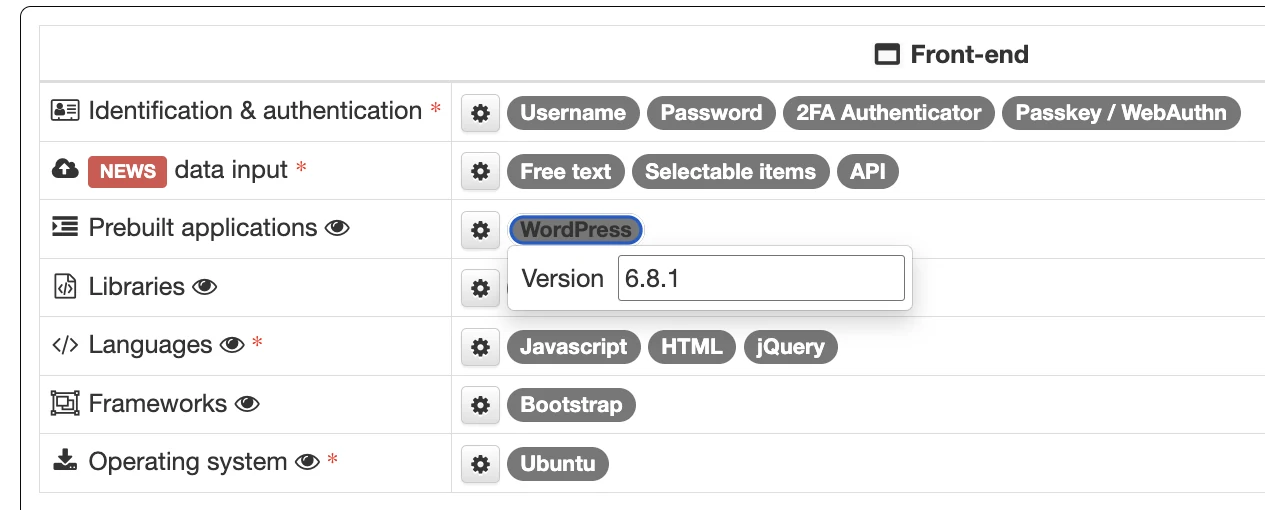
(d)Supply chain securityPartlyAn inventory of the third-party software in your stack, with versions, monitored for vulnerabilities. Assessing your suppliers is not covered.
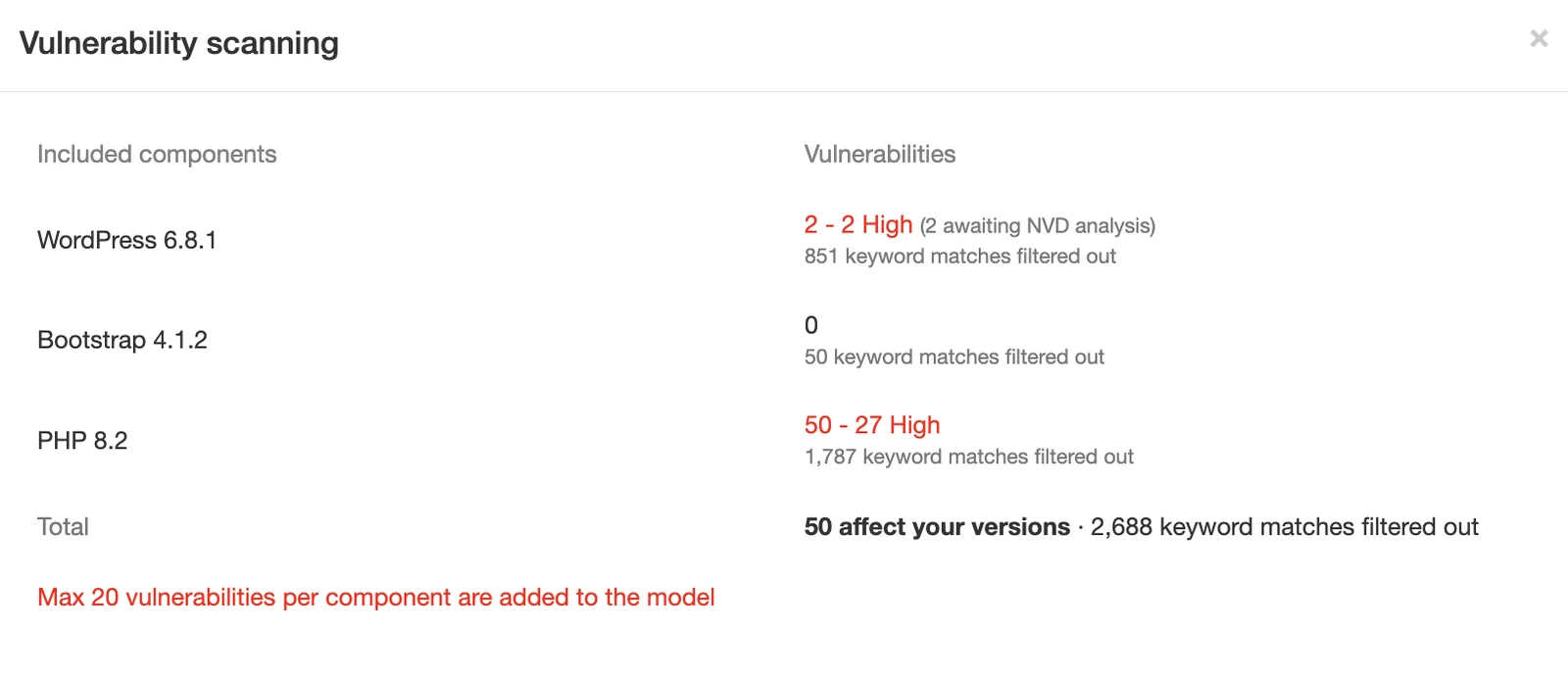
(e)Security in acquisition, development and maintenance, including vulnerability handlingCoveredVulnerability data refreshed nightly from NVD and matched to the exact versions you run, known-exploited (CISA KEV) first — each finding verified, mitigated or dismissed, with dates. Components we can't match precisely are shown as possible matches. A vulnerability disclosure policy is yours.
(f)Assessing the effectiveness of the measuresCoveredControls and their status, maturity level and residual risk tracked over time — a dated trail, not a one-off report.
(g)Basic cyber hygiene and trainingNot coveredThe in-app mentor videos help, but they are not training records.
(h)Cryptography and encryptionNot coveredPolicy work.
(i)HR security, access control and asset managementNot coveredYour model's asset and user-role profile supports this work, but is not an HR or access-control process.
(j)Multi-factor authentication and secured communicationsNot coveredPolicy and configuration work.

Measures (d) and (e) use version scanning, on the PRO and GURU plans. The threat model, incident log and controls are on every plan, including the free one.

Beyond Article 21

ObligationEvidenceWhat you get
Art. 20Management approval and oversightPartlyManagement must approve the measures and oversee them. The dated record shows your board what was decided, and when. Management training is yours to arrange.
Art. 23Reporting incidents to your authorityNot coveredAn early warning within 24 hours, a notification within 72 hours and a final report within one month of that notification. Your incident log helps you prepare them.
Evidence Over Time

A Record, Not A Snapshot.

Dated from day oneFindings, controls and your risk level are dated, so you can show what you knew and when you acted.
Version-preciseThe vulnerabilities that affect the software versions you actually run — not keyword noise. Anything we can't match precisely is marked as a possible match.
Known-exploited firstVulnerabilities on CISA's known-exploited list lead the queue, because attackers are already using them.
Get Started

How Do You Want To Do It?

Pick what fits — it tells us how to help. Every option starts with a free account.

YOUR CHOICE:

A verification email is sent to this address

You already have an account? Log in here.
Ståle Ekelund
Ståle Ekelund · Founder

Over 30 years in cyber security, from management to full-stack programming. Questions before you sign up? Ask me on LinkedIn →